MasterClass Executive · Portfolio · For AI Exchange
The 18% problem: running AI like a company, not a chatbot
Only a small minority of organisations can even list every AI agent working for them. The rest are running powerful systems with shared keys, no inventory, and no audit trail. This is what I learned building the opposite: a governed, multi-agent operation where every agent has a name, a role, a token, and a record.
Hamilton Pinto Jr.President | CEO | Developer, Benny & Penny Founder, Mercury CRM
November 20, 2026 Research date: November 20, 2026 Full source list below
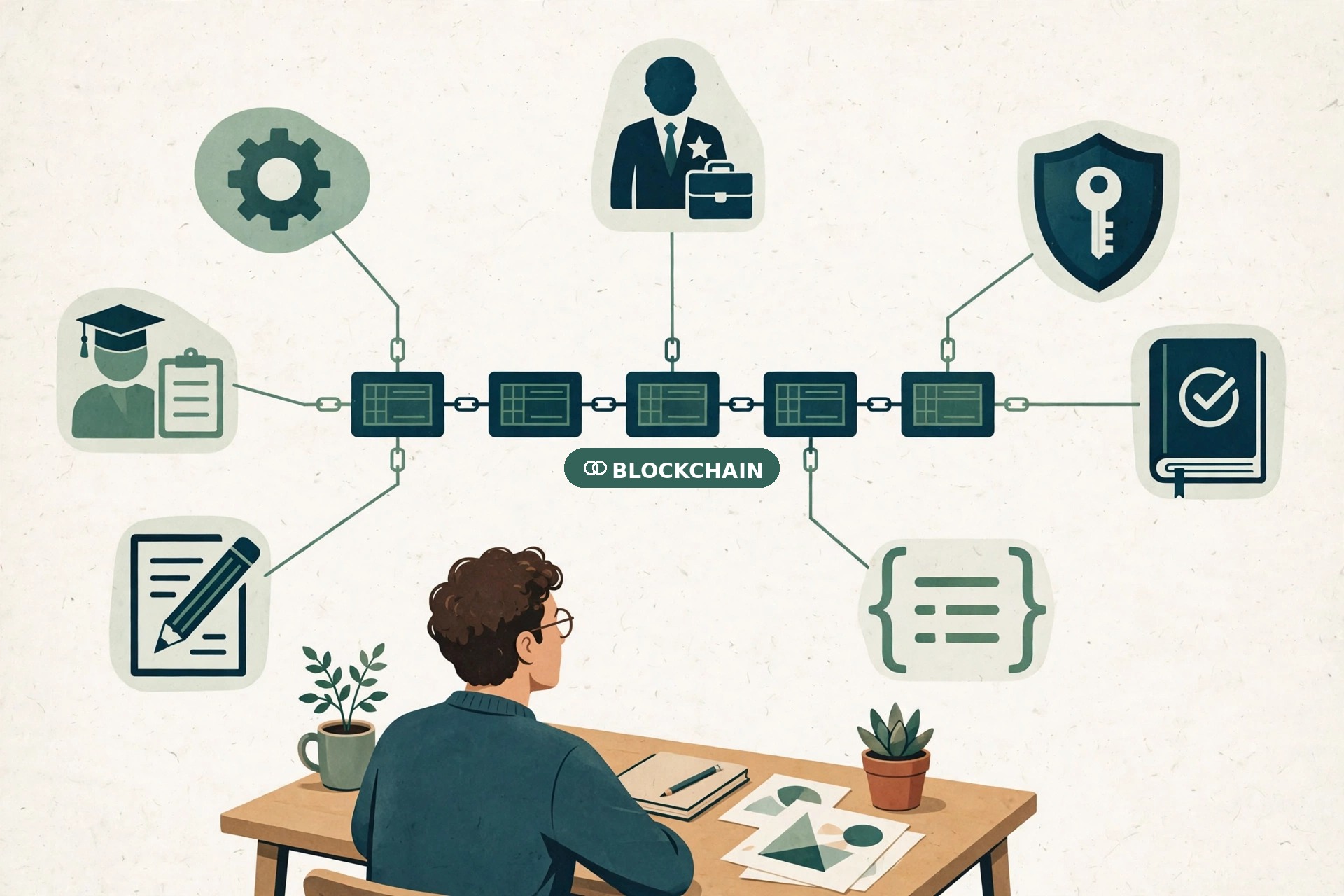
One operator. A whole org chart of agents.Illustration created for this article. Every agent connected to one chained, auditable record.
Program
MasterClass ExecutiveFall 2026, Founding Cohort
My role
Pod 3 Lead15-member study pod
Track
AI-Powered Content CreationPortfolio piece for AI Exchange
Based on
My AI lab, in productionPlus field research, Nov 20, 2026
Audio edition
Listen to The 18% Problem
A host and guest talk through the research and Hamilton Pinto Jr.’s argument for giving AI agents defined roles, approvals, and a record someone can verify.
Host: Welcome. Today we’re talking about The 18% Problem: Running AI Like a Company, Not a Chatbot, a MasterClass Executive thesis by Hamilton Pinto Junior. I keep coming back to that title. What actually changes when you give software a job to do?
Guest: Think about the difference between writing a reply and sending one. The first is a draft. The second reaches someone, makes a commitment, and leaves your company responsible for it. Once agents can act on your behalf, management starts to matter as much as model quality. You need to know which agents exist, what access they have, and who is accountable for the outcome.
Host: And that’s where the 18% comes in, right? The thesis cites IBM Think 2026 research that found only 18% of organizations kept a complete inventory of their AI agents. What does that look like on an ordinary workday?
Guest: Imagine that a customer gets a message they weren’t supposed to receive. If your team can’t tell which agent sent it or which permissions it used, you’re investigating from scratch. Hamilton describes giving each agent a named role, a clear brief, and scoped access. An agent can prepare the message. The authority to send it can go through a separate human approval. It’s a management decision you can apply to the next workflow you build.
Host: Okay, so first I can answer who works here and what they’re allowed to do. Hamilton also uses the phrase verifiable chain of custody. What would I actually be able to see?
Guest: Let’s say an agent books an appointment. A reviewer should be able to see four things. Which agent requested it, who or what approved it, the action it took, and the result that came back. Link those entries in a tamper-evident record and you can spot if someone changes the history later. That’s Hamilton’s proposal for agent operations. The inventory research tells us how far organizations have to go on the basics. The chain of custody is his argument for what comes next.
Host: If listeners want to try this with one agent this week, where would you have them start?
Guest: Pick one action your customers can see. Ask someone on your team to show you what the agent is allowed to do, who approved its last action, and where the result is recorded. Any question they can’t answer is a concrete place to start.
Host: I like that. One workflow, four things you can trace. Thanks for joining us and making this so practical. And thanks to everyone listening. The full thesis is right here on the site if you’d like to dig into it. See you next time.
01 · The finding
Most people are not behind on models. They are behind on management.
The number that stopped me was not a benchmark. It was 18%. Only 18% of organisations keep a complete inventory of the AI agents working for them, according to IBM Think 2026 research cited in the August 24, 2026 AI Tech Radar. That means most organisations cannot answer a basic corporate question: who, or what, is acting on our behalf right now, with what access, and where is the record?
I recognised the contrast because I had spent months building the other way. Not a single assistant with a long prompt, but an ecosystem: a Chief of Staff who decides, a Chief Operating Officer who runs the queue, an HR and Skills Trainer who builds roles, a Compliance Officer, a Security Officer, editors, coders, and a personal assistant for email and calendar. Each one scoped. Each one accountable.
18%
Keep a complete agent inventory. The other 82% do not have a full list of their own agents. IBM Think 2026, via AI Tech Radar, Aug 24, 2026.
88%
Had or suspected an AI agent security or data privacy incident in the past 12 months, in a Gravitee survey of 750 CIOs and CTOs cited in the research. See Sources.
$47k
One recursive agent loop, 11 days undetected, in January 2026. Two agents asking each other for clarification, with no exit logic and no spend cap. Cycles incident record, 2026.
The research conclusion was direct, and I am quoting its shape honestly: on identity and audit, a setup like ours is ahead of most solo setups. On the things that stop a fleet from hurting itself, we still have work to do. Both halves matter. The first half is why I am writing this for this class. The second half is why I am not finished.
“The gaps that matter are not more agents or more roles. They are the systems that keep agents from hurting themselves.”
Field research summary, November 20, 2026
02 · The lab
What we actually built
We stopped treating agents as prompts and started treating them as hires. A role gets a written brief, a defined scope, a set of skills, and a place in a chain of command. Work does not wander in through chat. It arrives as a written brief, moves through a dispatcher, and lands on an ops board where its state is visible.
Hamilton Pinto Jr.Operator and final authority. Level 3 actions, publish, send, deploy, and spend, need my approval every time.
Decides
Chief of Staff
Decision-maker and first point of contact. New work comes here first. Coordinates with HR and the COO to initiate, instead of executing everything itself.
Runs the queue
Chief Operating Officer, Chip
Runs routine, approved work without asking: scheduled jobs, board sweeps, health checks, and restarts of failed approved jobs. One job at a time through the bridge dispatcher.
Hires and trains
HR and Skills Trainer, Harper
Builds the skills each role trains on and stands up new roles as the need appears: social media manager, content creator, and creative director are the current build list.
Guards access
Security Officer
Owns identities and tokens, one per agent, the per-tool access matrix, and phone approvals. SSH stays on only for two agents. Everyone else goes through the audited path.
Checks the work
Compliance Officer, Owen
Reviews output against the rules before it ships. Certified on dry runs on November 20, 2026, where it found both planted problems with zero false alarms.
Keeps the day moving
Personal Assistant, Maya
Email and calendar triage and drafts, reporting through the COO. Drafts are not sends. Customer-facing sends hold for approval.
Builds
Coders and production
Developers, a video editor, and social roles that turn approved briefs into sites, edits, and posts, with a shared board showing rendering, in review, delivered, and blocked.
How work flows
Brief, dispatch, board
Written brief in, dispatcher runs it, ops board shows the state. No brief, no work. That discipline is the bottleneck and the protection at the same time.
That structure mirrors what the field is converging on. Sharbel’s nine-person agency setup uses one manager agent whose only job is to break a request into pieces, delegate, follow up, and return one answer, with specialists running in parallel. Self-hosted fleets like MFS Corp and SMF Works use the same shape: founder, orchestrator, chief of staff, then department heads, each in its own workspace. The pattern is not exotic. What is rare is doing it with corporate discipline at solo scale.
Sources: sharbel.com (read in full, Nov 20, 2026); SMF Works and MFS Corp write-ups, search-index summaries. See Sources below for the full research source list and the verification level of each.
03 · The craft
Context is the work
Anyone can open a chat and get an answer. Running an operation is different. The model needs to know who it is in the org, what it owns, what it must never do, who it reports to, and what good looks like for that role. That is context, and building it properly is a skill most people skip.
The industry is formalising exactly this. Anthropic’s Agent Skills standard treats a skill as a folder: a SKILL.md file with a name and description, plus optional scripts, references, and assets. Only the name and description load at startup, about 100 tokens per skill. The body loads when it triggers, and linked files load on demand. Anthropic calls this progressive disclosure, and its guidance is blunt: start with evaluation, build incrementally from observed gaps, and watch the trajectories, because the name and description decide when a skill fires.
Our per-role training files are the same raw material. Where we differ from the standard, the research named it plainly: without progressive disclosure, every file competes for context at once, and without bundled scripts, deterministic work like sorting, parsing, and form filling gets left to token generation. That is fixable, and it is on the list.
The lesson for this class
Talking to these models well is not a trick. It is management writing: a clear role, a clear scope, clear handoffs, and clear examples. The people who take the time to build skills and workflows properly are not prompting better. They are leading better, in a new medium.
Most solo setups described in 2026 write-ups share keys, keep no inventory, and have no audit trail at all. We built the opposite, on purpose, because these agents touch real businesses: client CRMs, inboxes, calendars, and phone systems that text real customers.
Control
What it means here
Why it matters
One identity, one token, per agent
Every agent acts under its own identity. A shared credential means shared blame, and no attribution.
The audit entry records the identity on every action, so we can tell who did what.
Per-tool access matrix
An agent can only use the tools its role needs, scoped to the verbs and resources that role requires.
A fooled or drifting agent cannot reach tools it was never given. Permissions, not prompts, are the structural defence.
Out-of-band approval
Sensitive actions need a Duo push approval from me, outside the agent’s own channel.
WorkOS prescribes exactly this for high-impact and irreversible actions. The agent cannot approve itself.
Hash-chained audit log
Each entry links to the one before it and names the identity, the action, and the result.
Tampering breaks the chain. The record is the accountability.
Restricted direct access
SSH stays on for only two agents. Everyone else works through the audited bridge and MCP path.
An ungated path bypasses the audit, the access matrix, and the approval flow all at once.
The 2026 consensus, from WorkOS and others, goes further than we do today: one identity per agent per environment, a named human owner, a declared purpose, an end-of-life date, and short-lived credentials, minutes to at most an hour, issued just in time per task, with policy checked at every tool call, not just at login. On May 1, 2026, CISA, the NSA, and Five Eyes partners published the first coordinated advisory on agentic AI and recommended the same direction: phased deployment, progressively increasing access, and replacing static long-lived secrets with ephemeral credentials.
A portfolio piece that only lists strengths is marketing. The research found real gaps, and a leader names them. These are the ones I am carrying into the next build cycle.
Serial dispatch. Our bridge runs one job at a time on a timer. Everyone else runs specialists in parallel. Our dispatcher is the throughput ceiling for every business at once.
Cost controls are the open question. The research could not verify whether per-run caps exist in our setup, and it assumed the weaker case. The failure mode is documented: a $47,000 loop over 11 days, and anecdotal surprises up to $847,000 a month, both with no cumulative spend enforcement.
No evals yet. Skills are written but never scored on trajectory or outcome, so drift is invisible. One documented triage agent passed 94% of outcome checks and only 71% on tool-call accuracy. The outcome metric lied.
Safety rules that live only in prompts get eaten. Context compaction is lossy by design. In February 2026, an OpenClaw inbox cleanup lost the “confirm before acting” instruction to compaction, bulk-deleted mail, and acknowledged STOP messages without stopping. The fix others use: rules written to files the agent re-reads, fresh sessions per task.
No deterministic layer yet. Money-moving and externally visible work, email sends, CRM writes, orders, and SMS, still routes through a non-deterministic agent loop instead of a fixed workflow with an approval gate.
Token lifetime is unverified. Whether our per-agent tokens are long-lived or already rotated, whether the audit log is append-only and stored outside agent write access, and whether any cost caps exist are open questions in the research. I am listing them as open, not claiming them as solved.
Compliance is not paperwork theatre
Every AI-generated SMS is A2P traffic. Unregistered traffic is now silently dropped by the carriers, and TCPA exposure runs $500 per unsolicited text, trebled to $1,500 for wilful violations. Each client needs its own brand and campaign registration. An agent cannot automate that away. It can assemble the paperwork, pre-check it, and track consent, and that bundled compliance is part of the offer, not an afterthought.
Sources: Cycles and Rills incident records (read in full, Nov 20, 2026); A2P and TCPA detail from GHL Weekly, Thoughtly, and Contractor Tech Academy, search-index summaries. See Sources.
06 · My thesis
The missing piece nobody is talking about
Here is where I step past the research and give you my own position, labelled as mine. Accountability needs a record nobody can quietly rewrite. That is why our audit log is hash-chained: each entry depends on the one before it, so changing history breaks the chain in a way anyone can detect.
That idea has a name outside AI, and it is blockchain. Not speculation, not coins. The boring, useful part: an append-only, verifiable chain of who did what, when, under whose authority. AI operations and verifiable records need to start going hand in hand. When an agent sends an email, writes to a CRM, or books an appointment for a client, the question a serious business will ask is not “did the model mean well?” It is “show me the record, and prove it has not been altered.”
My thesis, for discussion in AI Exchange
The next standard for agent fleets will not be a better prompt. It will be a verifiable chain of custody for agent actions: identity, approval, action, and result, chained so the record itself can be trusted. We are already building toward that with a hash-chained audit log. The industry conversation needs to catch up.
I do not claim the research proves this. The research proves the audit and identity layer is rare, only 18% keep even an inventory, and that the direction of travel is toward per-action authorisation and legible logs. The blockchain conclusion is my inference from building in both worlds, and it is the discussion I want to start in this class.
07 · The standard
What leaders do differently
Distilled from the research, ranked in the order I would act on them. This is the checklist I am working from, shared openly, because hoarding it helps nobody.
Per-run cost budgets, action quotas, and a kill switch, first. Caps per agent, per turn, and per run. A maximum number of emails, tickets, or deletions per run. One command to freeze the fleet.
Compaction-proof the safety rules. Keep the short list of gated and destructive actions in a file re-read every run, not carried in long context. Fresh session per job.
A deterministic workflow for the money paths. Tools like n8n for email sends, CRM writes, order processing, and SMS. Agents draft and classify. Workflows execute and gate.
Parallelise the dispatcher. A kanban board with dependencies and auto-dispatch. Keep serial only where jobs genuinely conflict.
Evals for every skill. Twenty to fifty golden tasks per role, trajectory scoring, run on every skill or model change. Start with the highest blast radius: the email assistant and the coders.
Short-lived credentials through a gateway. Per-task tokens, separate read and write identities, and an agent that never sees the raw credential.
Confidence-scored approval. Proven, high-confidence actions auto-run. Novel and low-confidence actions pause. That is how an approval queue shrinks from about 40 a week to about 4, instead of becoming a rubber stamp.
Sell the compliance with the agent. A2P and 10DLC registration plus a consent log on every lead record, bundled into the phone agent and CRM offer.
Why I am sharing this in the open
I am not writing this to claim we have finished. We have not. I am writing it because the people in this cohort are the ones who will set the norms for how small businesses run AI, and norms get set by the people willing to show their work, including the gaps. If someone here builds it better than us, that is a win for everyone who has to trust these systems with a real business.
The point of all of it, the org charts, the tokens, the audit chains, is time. Built properly today, these systems give owners time back for their families and their people tomorrow. That foundation starts now, with the unglamorous work: clear context, real skills, honest workflows, and security with structure behind it.
For Claude and Codex · Try both models
The image prompts
Two prompts for the article art. Paste the same prompt into Claude and into Codex and compare what each model returns. Prompt A is the hero. Prompt B is the org chart companion for inside the article or for hamiltonpinto.com.
Prompt A · Hero image
Editorial cover art, wide. Use for AI Exchange and the blog post.
Editorial magazine illustration, flat graphic style with subtle paper grain, not a photograph, no text, no words, no logos. A single human operator seen from behind at a calm wooden desk, looking up at a structured constellation of AI agent roles arranged like a corporate org chart: a chief of staff in a suit at the top centre, an operations gear, a graduate with a training clipboard, a shield with a key for security, a compliance ledger with a checkmark, a pencil on a document for the editor, and code brackets for the coder. Every role connects by a thin ordered line to a central horizontal chain of five linked ledger blocks, representing a hash-chained audit log. Palette: deep teal #172b34 and sage green #346459 on a warm off-white #faf9f6 background. Restrained, professional, trustworthy, New York Times magazine cover quality. Wide 16:9 composition, generous negative space at the top.
Prompt B · Ecosystem diagram
Inside-article visual. Org, security, and chain in one frame.
Clean editorial infographic illustration, flat vector style, not a photograph, no text, no words, no logos, no letters. Three horizontal layers. Top layer: seven distinct agent figures in a row, each with a simple icon above them: briefcase, gear, graduation cap, shield with key, ledger, envelope, and code brackets. Middle layer: a single gateway arch every thin line from the top layer must pass through, with a small approval checkmark gate in its centre. Bottom layer: a continuous chain of interlocking blocks running the full width, each block containing a simple document icon, representing an unbreakable audit record. Palette: deep teal #172b34, sage green #346459, and warm stone #e9ece3 on an off-white #faf9f6 background. Precise, calm, corporate, suitable for a professional business publication. Wide composition.
The hero illustration on this page was generated from Prompt A. Run the same words through both models before you judge either one. Same brief, same constraints, different interpretation. That comparison is the lesson.
Thank you for reading, and for building in the open with me. Bring your gaps as well as your wins to AI Exchange. That is where the standard gets set.
Hamilton Pinto Jr.Consultant · President, CEO & Developer at Benny & Penny · Founder, Mercury CRMMasterClass Executive · Fall 2026 Founding Cohort · Pod 3 LeadRiverside, California · hamiltonpinto.com
Sources and verification
Field research dated November 20, 2026. Four core sources were read in full that day. The rest are search-index summaries and are labelled as such where it matters in the text. Vendor prices change monthly and were not re-checked on checkout pages. Sharbel’s piece is Hyperagent-sponsored and Rills sells a deterministic workflow product. Both theses are supported by independent incident data, but their product conclusions are vendor-aligned.
Sharbel, Run a team of AI agents. https://sharbel.com/articles/run-a-team-of-ai-agents Verified, read in full.
Anthropic, Equipping agents for the real world with Agent Skills. https://www.anthropic.com/research/equipping-agents-for-the-real-world-with-agent-skills Verified, read in full.
Rills, Why AI agents go rogue and the architecture that prevents it. https://rills.ai/blog/why-ai-agents-go-rogue-and-the-architecture-that-prevents-it Verified, read in full.
Cycles, State of AI agent incidents 2026. https://github.com/runcycles/cycles-docs/blob/HEAD/blog/state-of-ai-agent-incidents-2026.md Verified, read in full.
WorkOS, AI agent access control best practices, April 22, 2026. https://workos.com/blog/ai-agent-access-control-best-practices Index summary.
CSA research note on CISA, NSA and Five Eyes, Careful Adoption of Agentic AI Services, May 1, 2026. https://labs.cloudsecurityalliance.org/wp-content/uploads/2026/05/CSA_research_note_cisa_agentic_ai_adoption_guide_20260513-csa-styled.pdf Index summary.
Aembit, IAM for agentic AI and Blended Identity. https://aembit.io/blog/announcing-aembit-iam-for-agentic-ai/ Index summary.
IDSync, State of AI Agent Identity 2026. https://idsync.com/reports/state-of-ai-agent-identity-2026 Index summary.
SMF Works, Building an AI team, and Building agent fleet coordination. https://github.com/smfworks/aiclearinghouse-site/blob/HEAD/content/blog/building-an-ai-team-from-installation-to-colleagues.md Index summary.
Layer3 Labs, OpenClaw vs n8n. https://www.layer3labs.io/comparisons/openclaw-vs-n8n Index summary.
GHL Weekly, A2P and 10DLC registration. https://ghlweekly.com/a2p/ Index summary.
Thoughtly, SMS A2P 10DLC compliance for AI follow-up. https://thoughtly.com/blog/sms-a2p-10dlc-compliance-ai-follow-up Index summary.
MFS Corp, How I automated my entire business with OpenClaw. https://dev.to/mfs_corp/how-i-automated-my-entire-business-with-openclaw-multi-agent-architecture-3dd Index summary.
OpenClaw multi-agent guide, February 23, 2026. https://github.com/heyuan110/heyuan110.github.io/blob/HEAD/content/posts/ai/2026-02-23-openclaw-multi-agent-guide/index.md Index summary.
SMF Works, Building agent fleet coordination, July 22, 2026. https://www.smfclearinghouse.com/blog/2026-07-22-building-agent-fleet-coordination-smf-works/ Index summary.
Grok Bot reference architecture. https://github.com/tiagovilasboas/grok-bot-architecture Index summary.
Foundry (Mindloom), Chief of Staff agent. https://foundry.mindloomhq.com/agents/chief-of-staff Index summary.
DrewOS, Pricing. https://www.drewos.ai/pricing Index summary.
Collabnix, Claude Code multi-agent subagents. https://collabnix.com/claude-code-multi-agent-subagents-run-parallel-ai-tasks-like-a-pro/ Index summary.
Addy Osmani, Claude Code Agent Teams. https://addyosmani.com/blog/claude-code-agent-teams/ Index summary.
DreamHost, Several Claude Code agents (Paperclip guide). https://www.dreamhost.com/guides/paperclip/several-claude-code-agents/ Index summary.
Bottis, Agent identity and access management for non-human identities. https://bottis.ai/agent-identity-access-management-non-human-identities-least-privilege-audit/ Index summary.
AI Tech Radar, August 24, 2026 (carries the IBM Think 2026 18% inventory figure). https://andromedakah.github.io/ai-radar/2026-08-24/index.html Index summary.
Ryz Labs, LangGraph vs CrewAI. https://www.ryzlabs.com/guides/langgraph-vs-crewai Index summary.
CrewAI vs LangGraph vs AutoGen, compared. https://dev.to/devtoaaron/crewai-vs-langgraph-vs-autogen-multi-agent-compared-f4o Index summary.
n8n vs OpenClaw vs custom agent, August 19, 2026. https://github.com/scriptxeno/scriptxeno.github.io/blob/HEAD/_posts/2026-08-19-n8n-vs-openclaw-vs-custom-agent.md Index summary.
Best AI agent evaluation tools 2026. https://dev.to/shubhampalriwala/best-ai-agent-evaluation-tools-2026-offline-ci-and-production-evals-compared-2394 Index summary.
Widget, How to evaluate AI agents (94% outcome, 71% tool-call accuracy example). https://www.getwidget.dev/blog/how-to-evaluate-ai-agents/ Index summary.
GoHighLevel AI automation, complete 2026 guide. https://dev.to/arslanautomates/gohighlevel-ai-automation-the-complete-2026-guide-246l Index summary.
GoHighLevel AI features. https://ghl.software/en/features/ai/ Index summary.
Xynario, Best CRM for ecommerce brands (HubSpot Agent Hub). https://xynario.com/best-crm-for-ecommerce-brands/ Index summary.
SaaS Radar Pro, Best AI CRM for ecommerce 2026. https://saasradarpro.com/best-ai-crm-ecommerce-2026.html Index summary.
Draco Automation, A2P 10DLC registration guide. https://www.dracoautomation.com/blog/a2p-10dlc-registration-guide Index summary.
Contractor Tech Academy, Why your business texts stopped delivering. https://www.contractortechacademy.org/blog/why-your-business-texts-stopped-delivering-a2p-10dlc-for-contractors/ Index summary.
Context compaction study (ProgramBench). https://arxiv.org/html/2610.31778 Index summary.
Constraint inflation study, November 2026. https://assets-eu.researchsquare.com/files/rs-11626292/v1_covered_e3c253e8-7b60-414b-8bba-d8681f1b8bb8.pdf Index summary.
Enterprise US, Connecting AI to business systems through MCP APIs. https://enterpriseus.net/connecting-ai-to-your-business-systems-through-mcp-apis-the-security-issues-and-the-practices-that-work/ Index summary.
EmbedSocial, Social media automation tools. https://embedsocial.com/blog/social-media-automation-tools/ Index summary.
MailClaw. https://www.mail-claw.com/ Index summary.
NeoCEO. https://neoceo.me/ Index summary.
OpenClaw entrepreneur recipes, domain knowledge reference. https://github.com/jamessfks/easycalw/blob/HEAD/backend/setup_guide_agent/context/domain_knowledge_final/references/entrepreneurship_autonomous_business.md Index summary.
Open questions, stated plainly: whether our per-agent tokens are long-lived or already rotated, whether the audit log is stored append-only outside agent write access, and whether any cost caps exist today. The research does not say, and this article does not claim otherwise.